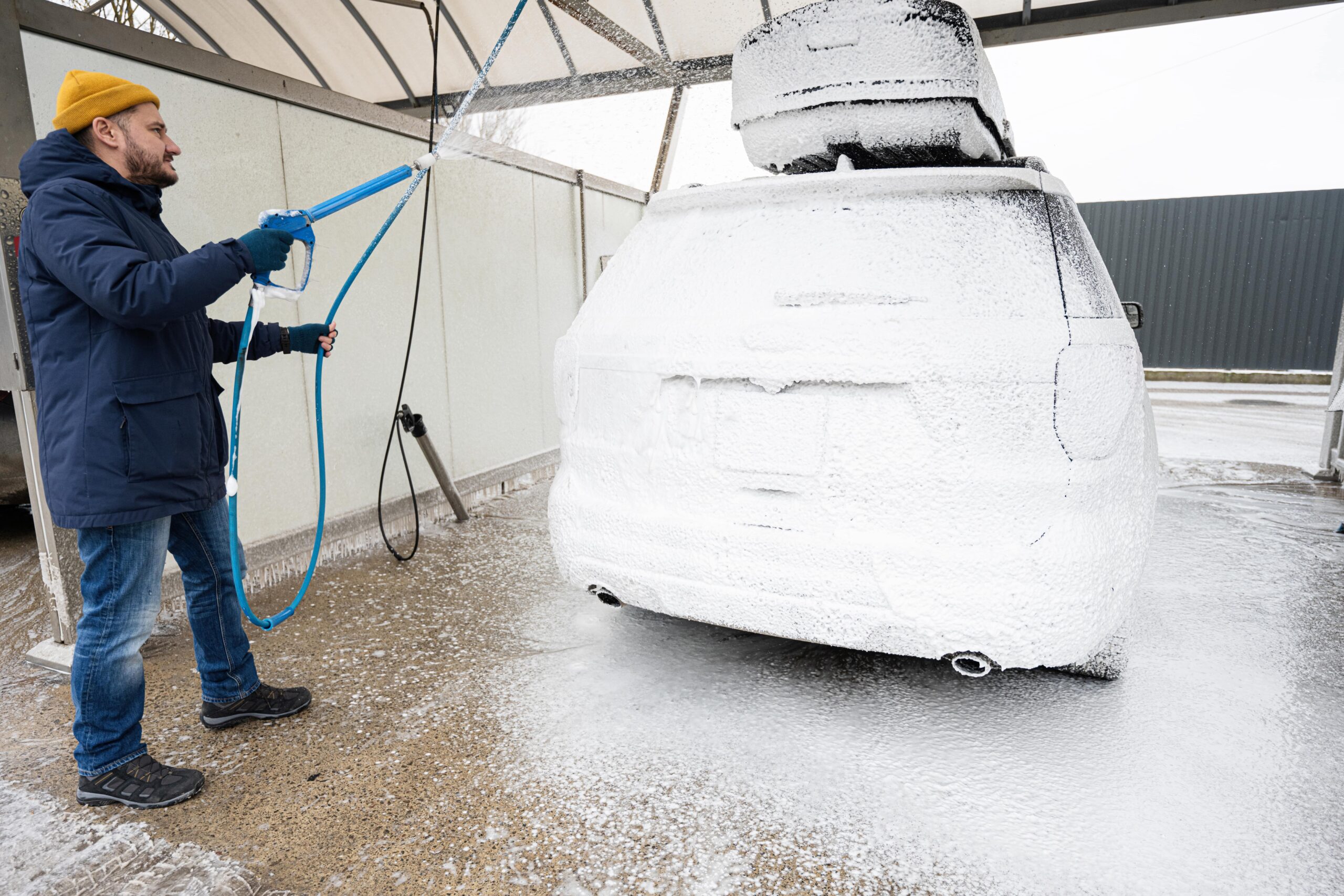

The safest way to get pollen off your car is a touch-free wash: a foaming pre-soak to loosen the film, a high-pressure rinse to lift it, and a spot-free rinse so it dries clean. Never wipe pollen off dry — the gritty film scratches clear coat. In North Texas pollen season, wash weekly.
Every spring, cars across Fort Worth turn the same shade of yellow-green. That dusting looks harmless, but between the oak pollen itself, the wrong cleanup habits, and the Texas sun, it is one of the sneakier ways paint picks up fine scratches and dull spots. Here is what pollen actually does, when it hits, and the right way to deal with it.
- 100%touch-free
- 3 minor less, every wash
- 8 ftmax vehicle height
- 24/7always open
Why Pollen Is Worse for Paint Than It Looks
Pollen is not soft dust. Under a microscope, grains are hard little shells, and oak pollen comes with a sticky coating that helps it cling to whatever it lands on — which is why a quick blast from a garden hose often leaves a yellow film behind. Add morning dew or a light shower and the film wets into a paste, then dries onto the clear coat in the afternoon heat.
The real damage usually comes from the cleanup. Wiping a pollen-coated hood with a dry towel or duster drags thousands of gritty particles across the finish, leaving the same fine swirl marks a dirty brush wash causes. The goal is always the same: float the pollen off with water and detergent, never rub it off dry.
North Texas Pollen Calendar: What Hits Your Car and When
| Pollen | Season in North Texas | What you see on the car |
|---|---|---|
| Mountain cedar | December – February | Fine dust that builds up in dry winter stretches |
| Oak and other trees | March – May | The heavy yellow-green film — the worst of the year |
| Grasses | May – September | Lighter dusting that mixes with summer road grime |
| Ragweed | Late August – November | Fine fall dust, heaviest near open fields |
Oak season is the one drivers notice most. For a few weeks in spring, a car parked outside near Eagle Mountain Lake or anywhere else in Fort Worth can pick up a visible coat of pollen in a single day.
How to Get Pollen Off Without Scratching
- Rinse first, top down. A high-pressure rinse floats the loose pollen off before anything else happens. Start at the roof and work down so you are not rinsing pollen over clean panels.
- Let the pre-soak work. The foaming detergent breaks the sticky coating that makes oak pollen cling. Give it a minute before the main rinse.
- High-pressure rinse again. With the film loosened, the pressure wash lifts it away without anything touching the paint.
- Finish with a spot-free rinse. Purified water dries without rings, so you are not trading a yellow film for hard water spots.
- Repeat weekly in season. During oak season, a quick wash every few days keeps the film from ever baking on. See how often to wash your car in Texas for the full schedule.
Make it a habitMonthly plans start at $27 and cover up to 15 washes. No contracts, cancel anytime.
See monthly plansWhat Not to Do When Your Car Is Covered in Pollen
- Do not wipe it off dry. A towel, duster, or sleeve turns pollen into sandpaper against your clear coat.
- Do not count on rain. A light shower wets pollen into a paste and leaves spotted rings when it dries.
- Do not run wipers on a dry windshield. Spray washer fluid generously first, or you grind grit across the glass.
- Do not let it sit for weeks. Sun and dew cycles harden the film and it gets more stubborn every day it stays.
Keeping Pollen Out of the Cabin
If your allergies flare every time you get in the car, the car itself may be part of the problem. Pollen collects in the cowl under the wipers, in the door jambs, and in the cabin air filter that feeds your vents. When you wash, let the rinse flow through the cowl area and wipe the door jambs while they are wet.
Set the climate control to recirculate on high-pollen days, and have the cabin air filter checked at your next oil change — a loaded filter keeps pushing pollen through the vents long after the season ends. A clean exterior helps too: less pollen on the car means less of it follows you inside.
Make spring washes effortless
A touch-free wash takes about three minutes and nothing touches your paint — ideal when the car needs a rinse every few days. Bugs and sap hitching a ride too? Here is how to handle love bugs, droppings, and tar.
Frequently Asked Questions
What is the best way to get pollen off a car? A touch-free wash: a foaming pre-soak loosens the pollen film, a high-pressure rinse lifts it away, and a spot-free rinse lets the car dry without water spots. Nothing touches the paint, so the gritty film never gets dragged across it.
Does rain wash pollen off your car? No — rain usually makes it worse. Light rain wets the pollen into a sticky film, and the drops dry into spotted yellow rings. After a spring shower is actually the best time to run through a wash.
Will pollen scratch car paint? Pollen sitting on the surface is not the danger — wiping it off dry is. Pollen grains are hard and gritty, so a dry towel, duster, or jacket sleeve drags them across the clear coat and leaves fine scratches.
How often should you wash your car during pollen season? Weekly is a good baseline, and every few days at the peak of oak season in March and April. A monthly plan at Ben’s starts at $27 and covers up to 15 washes, so frequent rinses cost nothing extra.
When is pollen season worst for cars in North Texas? Oak season, roughly March through May — that is the yellow-green film that coats everything in Fort Worth. Mountain cedar runs December through February, grasses through summer, and ragweed from late August into November.
Wash Anytime at Ben’s ScratchFree CarWash
Ben’s ScratchFree CarWash at 3130 Eagle Ranch Blvd, Fort Worth, TX 76179 is open 24/7, with a 100% touch-free automatic bay and four self-serve bays. See membership plans or get directions.
- Address
- 3130 Eagle Ranch Blvd, Fort Worth, TX 76179
- Hours
- Open 24 hours, 7 days a week
- Phone
- 945-381-6348