Last updated: November 1, 2026
- 0Paint contact
- 99%Non-corrosive chemistry
- 100%Spot-free rinse
- 24/7Open every day
In this guide
- What Is a Touchless Car Wash?
- Why Paint Gets Scratched in the First Place
- Touchless vs. Friction vs. Hand Wash: Paint Safety Compared
- The Honest Downsides of Touchless Washes
- Is a Touchless Wash Safe for Ceramic Coatings?
- Is It Safe for Matte Paint, Vinyl Wraps, and PPF?
- How to Get the Safest, Best Result From a Touchless Wash
- The Bottom Line
- Frequently Asked Questions
Short answer: yes. A touchless (touch-free) car wash is the safest type of automatic car wash for your paint, because nothing solid ever touches your vehicle — and scratches and swirl marks require two things at once: friction, and abrasive dirt particles being dragged across the clear coat. Remove the friction and you remove the scratch risk.
But “safe for paint” doesn’t mean “perfect at everything.” Touchless washes use stronger detergents than friction washes, and they can struggle with heavy, caked-on grime. This guide covers both sides honestly — how touchless washes protect paint, where they fall short, and how to get the best result — so you can decide what’s right for your vehicle.
What Is a Touchless Car Wash?
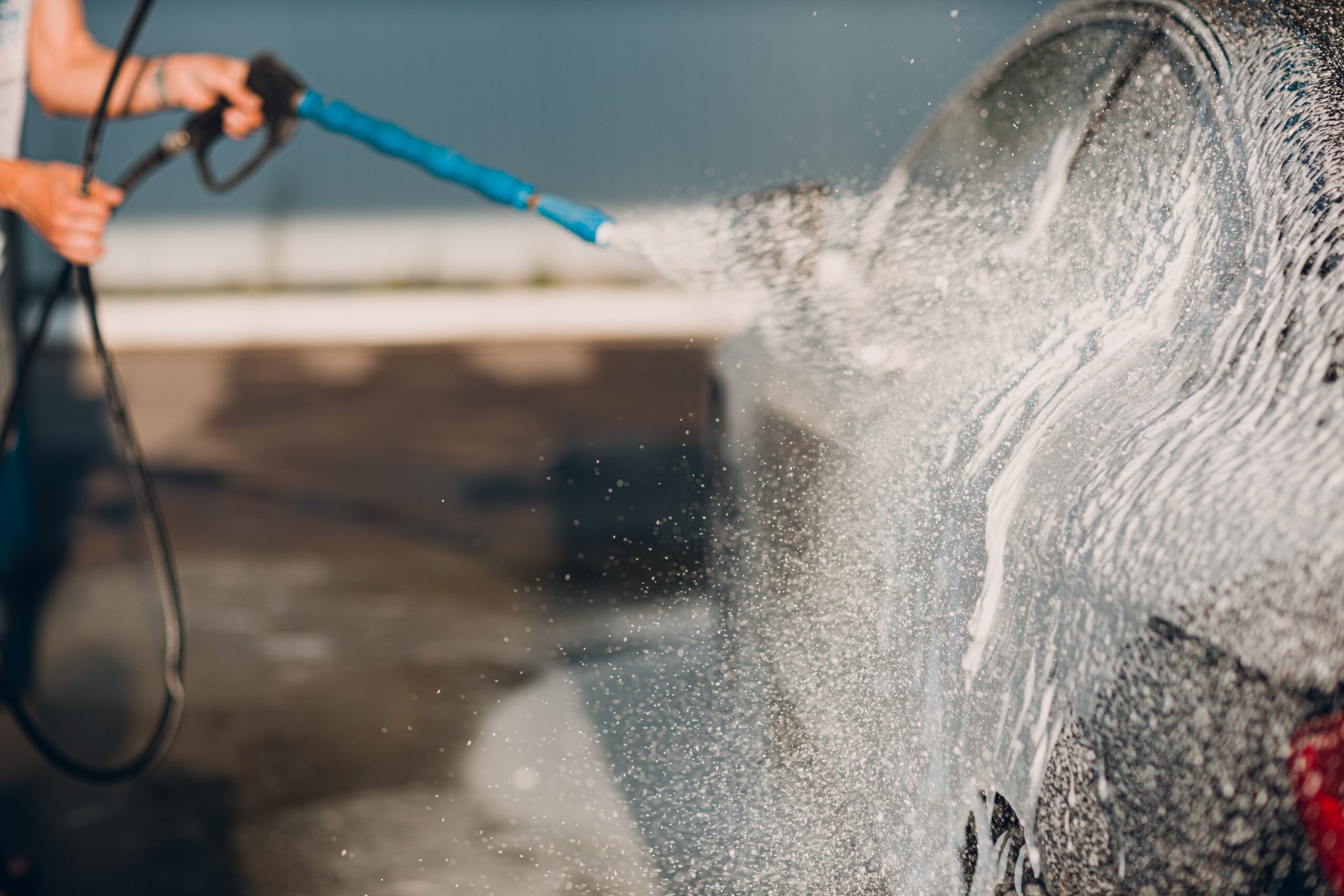
A touchless car wash cleans your vehicle using only chemistry and water pressure — no brushes, no cloth strips, no foam mitters. A typical cycle works in three stages:
- Chemical presoak. Detergents are sprayed onto the vehicle and given time to break the bond between dirt and paint.
- High-pressure rinse. Precisely aimed water jets blast the loosened dirt off the surface.
- Spot-free rinse. A final rinse with purified water prevents mineral deposits from drying on the paint.
At Ben’s ScratchFree CarWash in Fort Worth, the entire touch-free cycle takes 3 minutes or less, and the bay has 8 feet of clearance — enough for lifted trucks and duallies.
Why Paint Gets Scratched in the First Place
Modern automotive paint is protected by a thin, transparent clear coat. It’s harder than the color coat beneath it, but it’s still soft enough that dragging grit across it leaves micro-scratches. Under sunlight, thousands of these micro-scratches show up as the familiar spider-webbing called swirl marks.
Here’s the key fact: dirt alone doesn’t scratch paint, and water alone doesn’t scratch paint. Scratching happens when something presses dirt against the paint and moves it. That “something” is usually:
- Brushes and cloth strips in friction tunnel washes, which trap grit from the hundreds of cars washed before yours
- Sponges and mitts in careless hand washes, especially the single-bucket kind that re-applies the dirt you just wiped off
- Drying towels dragged across a dusty surface
A touchless wash removes the pressing-and-moving part of that equation entirely.
Touchless vs. Friction vs. Hand Wash: Paint Safety Compared
| Factor | Touchless | Friction (brushes/cloth) | Hand wash |
|---|---|---|---|
| Scratch/swirl risk | None from the wash itself — nothing touches the paint | Real risk — brushes carry grit from previous cars | Low if done correctly (two buckets, clean mitt); high if not |
| Cleaning power on heavy grime | Good, but may need a second pass on caked-on mud | Strong — physical scrubbing | Strongest — targeted agitation |
| Chemical strength | Stronger detergents (compensating for no friction) | Milder soaps | Mildest — pH-neutral shampoos |
| Safe for ceramic coatings | Yes — ideal | Risky — abrasion degrades the coating | Yes, with proper products |
| Safe for matte paint / wraps | Yes | No — friction can burnish matte finishes and lift wrap edges | Yes, with care |
| Time required | ~3 minutes | 5–10 minutes | 1–2 hours |
For a deeper head-to-head, see our complete touchless vs. brush car wash guide.
The Honest Downsides of Touchless Washes
If you’ve searched this question, you’ve probably seen articles claiming touchless washes damage paint. Most of those concerns are either overstated or avoidable — but they deserve straight answers.
1. Touchless washes use stronger chemicals
This one is true, and it’s worth understanding. Because there’s no brush doing mechanical work, touchless washes rely on chemistry — typically an alkaline presoak (sometimes paired with an acidic step) — to break dirt loose. Cheap or poorly maintained touchless washes can run harsh, high-pH detergents that, over many washes, dull unprotected paint, strip wax, and stain trim.
The fix is choosing a wash that invests in its chemistry. Ben’s uses Synergy Solutions Advanced Polymer Technology™, which is 99% DOT-classified non-corrosive — formulated to release dirt without attacking clear coat, trim, or coatings. If you’re evaluating a touchless wash anywhere, it’s fair to ask what chemistry they run.
2. They can struggle with heavy, caked-on grime
Chemistry and pressure handle normal road film, dust, pollen, and bugs well. But dried-on mud from an off-road weekend or weeks of baked-on grime may not come off in a single pass — there’s no brush to scrub it. Options: run a second cycle, or hit stubborn spots first in a self-serve wand bay (Ben’s has four on site, open 24/7). We cover this honestly in do touchless car washes actually clean well?
3. Water spots if the rinse water is hard
Any wash — touchless or not — that lets mineral-rich water dry on your paint leaves water spots, and severe spots can etch clear coat over time. This is a water-quality problem, not a touchless problem. A proper touchless wash ends with a spot-free rinse using purified water so droplets dry without leaving minerals behind. More on that in our hard water spots guide.
4. High-pressure jets — can they damage paint?
On healthy paint, no. Commercial touchless systems aim calibrated pressure at safe distances. The caveat: if your vehicle already has failing paint — peeling clear coat, rust bubbles, cracked body filler, or a fresh repaint that hasn’t cured (ask your body shop how long to wait) — high-pressure water can lift what was already letting go. That’s existing damage being revealed, not caused, but it’s worth knowing before any pressure wash.
Is a Touchless Wash Safe for Ceramic Coatings?
Yes — touchless is the recommended automatic wash for ceramic-coated vehicles. A ceramic coating’s hydrophobic layer makes dirt release easily under presoak and pressure, and avoiding friction preserves the coating’s finish and lifespan. Detailers who warn clients away from automatic washes are warning them away from brushes, not touch-free bays. Full details: touch-free washing for ceramic coatings.
Is It Safe for Matte Paint, Vinyl Wraps, and PPF?
- Matte paint: Friction is the enemy of matte — brushes can burnish glossy streaks into the finish that can’t be polished out. Touchless is the safe automatic option.
- Vinyl wraps: Brushes can lift wrap edges and dull the vinyl. Touchless washing is what most wrap installers recommend; avoid aiming self-serve wands directly at seams and edges at close range.
- Paint protection film (PPF): Same logic — touch-free washing preserves PPF’s self-healing top layer and keeps edges sealed.
How to Get the Safest, Best Result From a Touchless Wash
- Wash regularly, not rarely. Frequent washes mean light soil, which touchless chemistry removes completely. Letting grime bake on for a month is what creates the “touchless didn’t clean it all” experience. In Texas dust and pollen, here’s how often to wash.
- Keep a protective layer on the paint. Wax, sealant, or ceramic — protection makes dirt release faster and shields clear coat from everything, detergents included. See wax vs. sealant vs. ceramic.
- Pre-treat heavy grime. Mud-caked wheels or rocker panels? Hit them with a self-serve wand first, then run the touch-free cycle.
- Choose a wash with a spot-free purified rinse so nothing mineral dries on the paint.
- Skip the wash on compromised paint. Peeling clear coat or uncured repaints should be hand-washed gently until repaired or cured.
The Bottom Line
Is a touchless car wash safe for paint? Yes — it’s the safest automatic wash there is, because scratches need friction and touchless has none. The honest trade-offs are stronger detergents and less bite on heavy, caked-on grime — both solved by choosing a wash with quality, non-corrosive chemistry and washing regularly instead of rarely.
That’s exactly how Ben’s ScratchFree CarWash is built: 100% touch-free, Synergy Solutions Advanced Polymer Technology™ chemistry, a spot-free purified-water rinse, 8-ft clearance for lifted trucks, four self-serve bays, and 24/7 access at 3130 Eagle Ranch Blvd in Fort Worth — backed by a free rewash guarantee. Monthly memberships start at $27 and cover up to 15 washes a month, no contracts.
Paint-safe by designNothing touches your paint. Free rewash guarantee on every wash.
How It WorksFrequently Asked Questions
Will a touchless car wash scratch my car?
No. Scratches require friction — something dragging abrasive dirt across the paint. A touchless wash cleans with detergent and high-pressure water only, so nothing solid ever contacts your vehicle. The swirl marks associated with “car washes” come from brush and cloth tunnel washes, not touch-free bays.
Do touchless car washes damage clear coat?
A well-run touchless wash does not. The two real risks are harsh chemistry at low-quality washes (choose one using non-corrosive detergents) and hard-water spotting (choose one with a spot-free purified rinse). High-pressure water won’t harm intact clear coat; it can only lift paint that was already failing.
Are touchless car washes safe for ceramic-coated cars?
Yes — touchless is the automatic wash detailers recommend for coated vehicles. The coating helps dirt release under presoak and pressure, and the absence of brushes preserves the coating’s gloss and longevity.
Why do touchless car washes use stronger chemicals?
Because there’s no brush doing mechanical scrubbing, the detergents must break the dirt-to-paint bond on their own, so presoaks run stronger than friction-wash soaps. Quality washes offset this with paint-safe formulations — Ben’s chemistry is 99% DOT-classified non-corrosive.
What is the downside of a touchless car wash?
Two honest ones: stronger detergents than friction washes (choose a wash with paint-safe chemistry), and less effectiveness on heavy, caked-on grime, which may need a second pass or a self-serve pre-rinse. For normal road film, dust, and pollen, a touchless wash cleans thoroughly.
How often can I run my car through a touchless wash?
As often as you like — since nothing touches the paint, there’s no cumulative friction damage. Frequent washing actually protects paint by removing corrosive contaminants (bird droppings, bugs, pollen) before they etch. Ben’s members can wash up to 15 times a month.
Visit Ben’s ScratchFree CarWash
100% touch-free automatic wash and four self-serve bays — open 24/7, every day of the year, with a free rewash guarantee.
- Address
- 3130 Eagle Ranch Blvd, Fort Worth, TX 76179
- Hours
- Open 24 hours, 7 days a week
- Call or text
- 945-381-6348
- Payment
- Cashless — Apple Pay, Google Pay, all major cards